Water Quality Monitoring
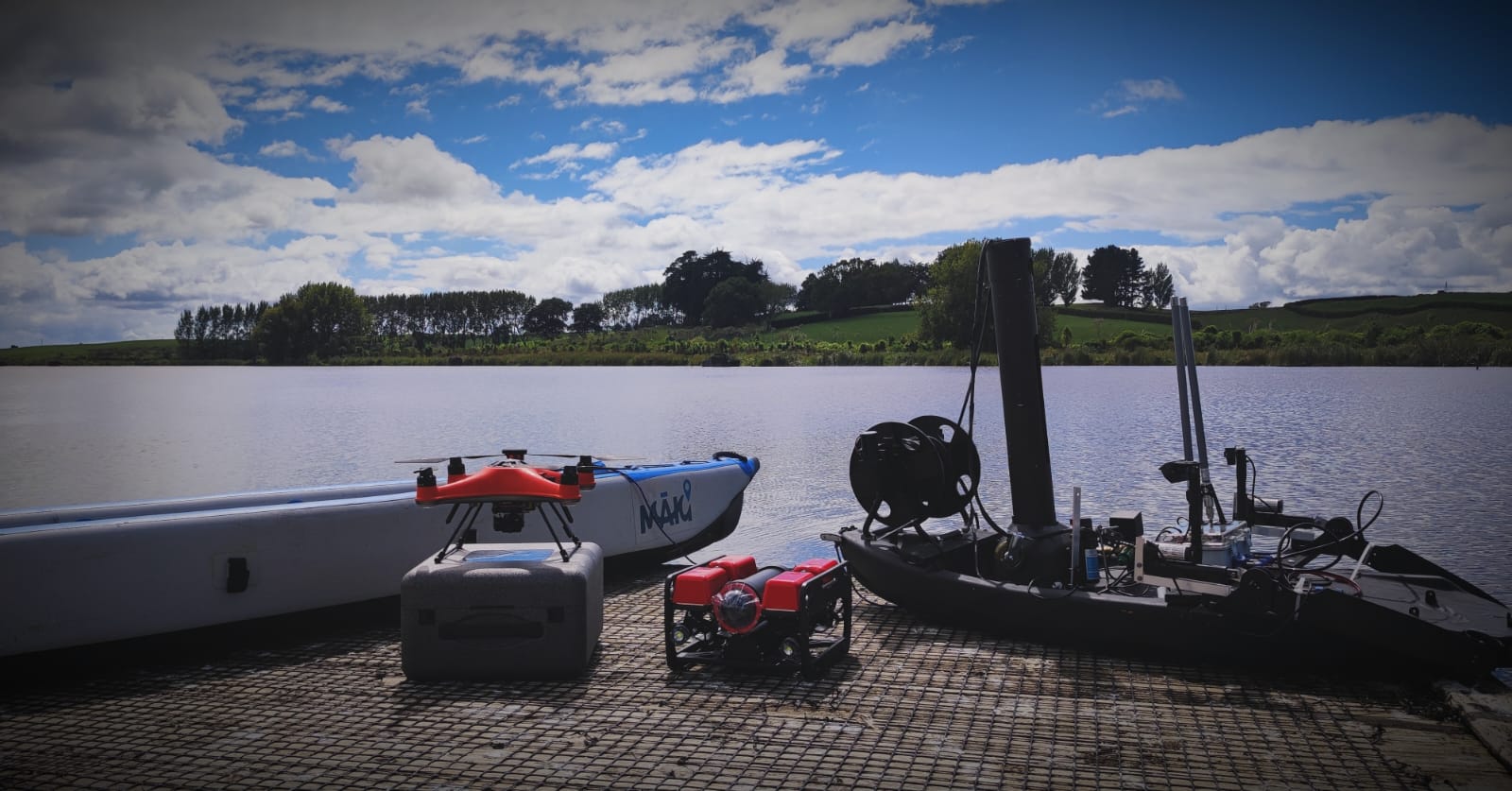
During the summer of 2024–2025, MĀKI deployed the autonomous MĀKI Boat V2 across multiple Waikato lakes to collect spatially comprehensive water quality data and physical water samples during active cyanobacteria (blue-green algae) bloom events. The autonomous deployment allowed safe, thorough monitoring of hazardous conditions that would otherwise put field staff at risk.
Cyanobacteria blooms pose serious public health risks and present a significant management challenge for regional councils responsible for freshwater quality. During active bloom events, lakes can become hazardous — making manual water sampling by staff dangerous and limiting the number and frequency of samples that can safely be collected.
Traditional point sampling from jetties or manned boats captures only a small number of fixed locations, making it difficult to understand how blooms are distributed spatially across a lake or how conditions are changing in near real-time. Waikato Regional Council needed a safer, more spatially comprehensive approach to monitoring bloom events.
MĀKI deployed the MĀKI Boat V2 — an autonomous surface vessel equipped with a multi-parameter water quality sensor suite and an integrated 15-metre winch sampler. The vessel followed programmed survey transects across each lake, collecting continuous readings of chlorophyll-a, phycocyanin (cyanobacteria indicator), turbidity, dissolved oxygen, pH and temperature at the surface and at depth.
At pre-selected locations, the winch sampler collected discrete water samples of up to 3 litres for laboratory analysis of nutrients, biological parameters and toxin concentrations. All sensor data and sample positions were georeferenced using RTK GPS, producing spatial maps of bloom distribution across the entire lake in a single deployment — something impossible to achieve with point sampling alone.
The programme gave Waikato Regional Council spatially rich, rapidly collected water quality data during bloom events — enabling more targeted management responses, better-informed public safety decisions, and a replicable monitoring approach that can be deployed repeatedly at scale across the region.
Talk to the MĀKI team about monitoring your lakes, rivers or ponds.
Get in touch